 Let's
Let's 
Games for Introverts: Quiet Party Games That Actually Work
"Come on, let's play Charades!" And instantly your stomach tightens. Standing up, flailing around while six pairs of eyes stare at you. For introverted people, that's not fun. It's stress. And yet every time you hear: "Don't be like that, it's just a game."
The problem isn't introverts. The problem is the games. There are fantastic quiet games to play with friends where nobody has to stand up, act things out, or be loud. Games where the most brilliant idea can come from the quietest person at the table. Here are 7 of them.
For a complete overview of party games for adults of all sizes, check out the guide.
Contents
The Core Problem: Performance vs. Creativity
Charades, Cranium, loud-mode Taboo: All these games reward performance. Whoever explains the loudest, gestures the wildest, or shouts the fastest wins. Introverted people aren't worse at games. They're worse at these games. That distinction matters.
Introversion doesn't mean shyness. Introverted people process stimuli differently: They prefer to think before they speak. They observe before they act. They don't need a stage to be creative. A game that harnesses these strengths instead of punishing them changes the entire dynamic of a game night.
The quiet group games on this list have one thing in common: They give everyone equal space. Whether you're loud or quiet, whether you love to talk or prefer to write, your contribution counts the same. And often it's the quietest person at the table who lands the cleverest bluff or gives the best clue.

Typing Instead of Talking
The simplest fix for introverted players: games where you type instead of talk. No spotlight, no performance. Everyone works quietly on their own screen or notepad, and the results speak for themselves.
Let's Fib! Recommended Free Browser
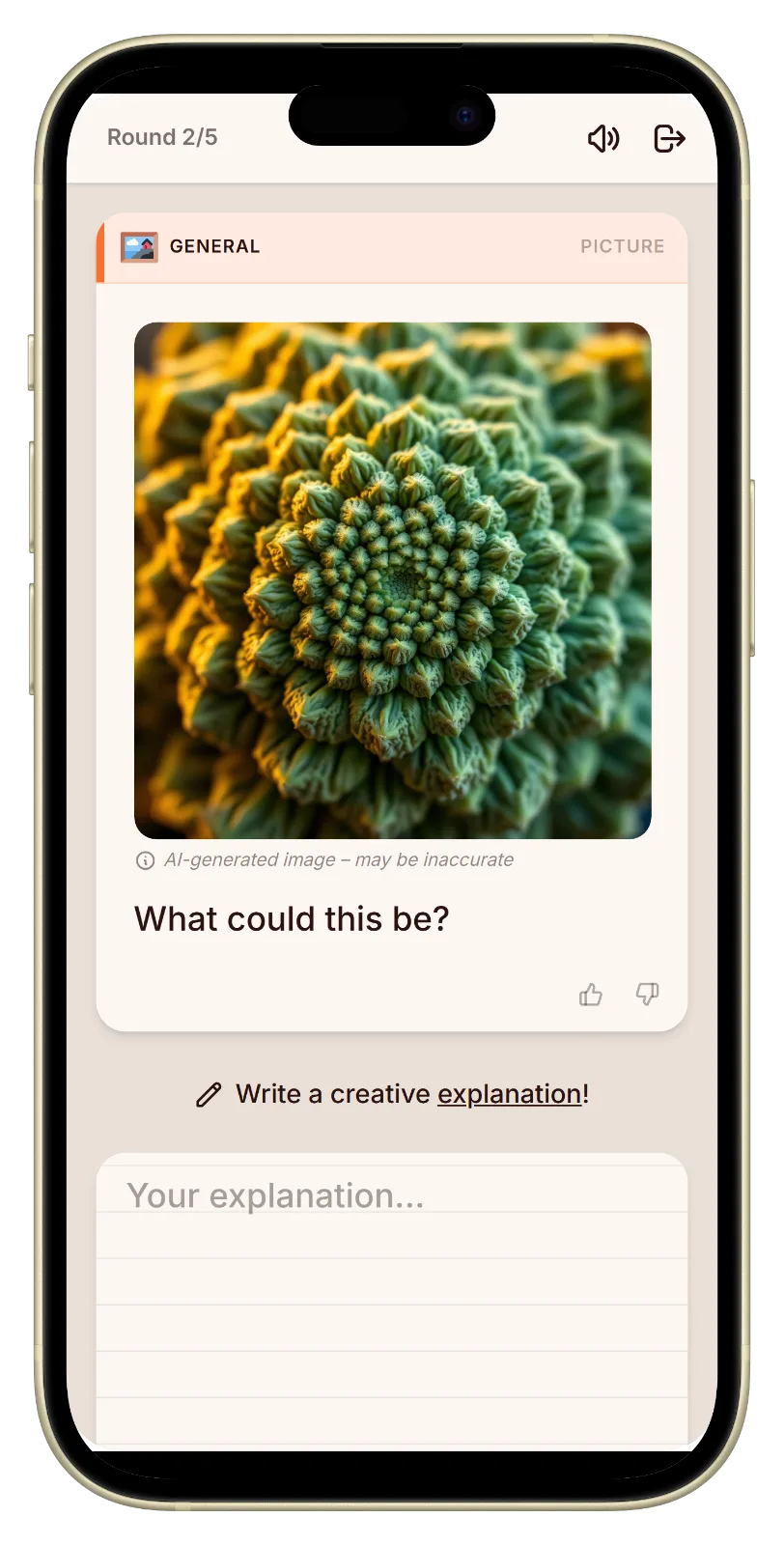
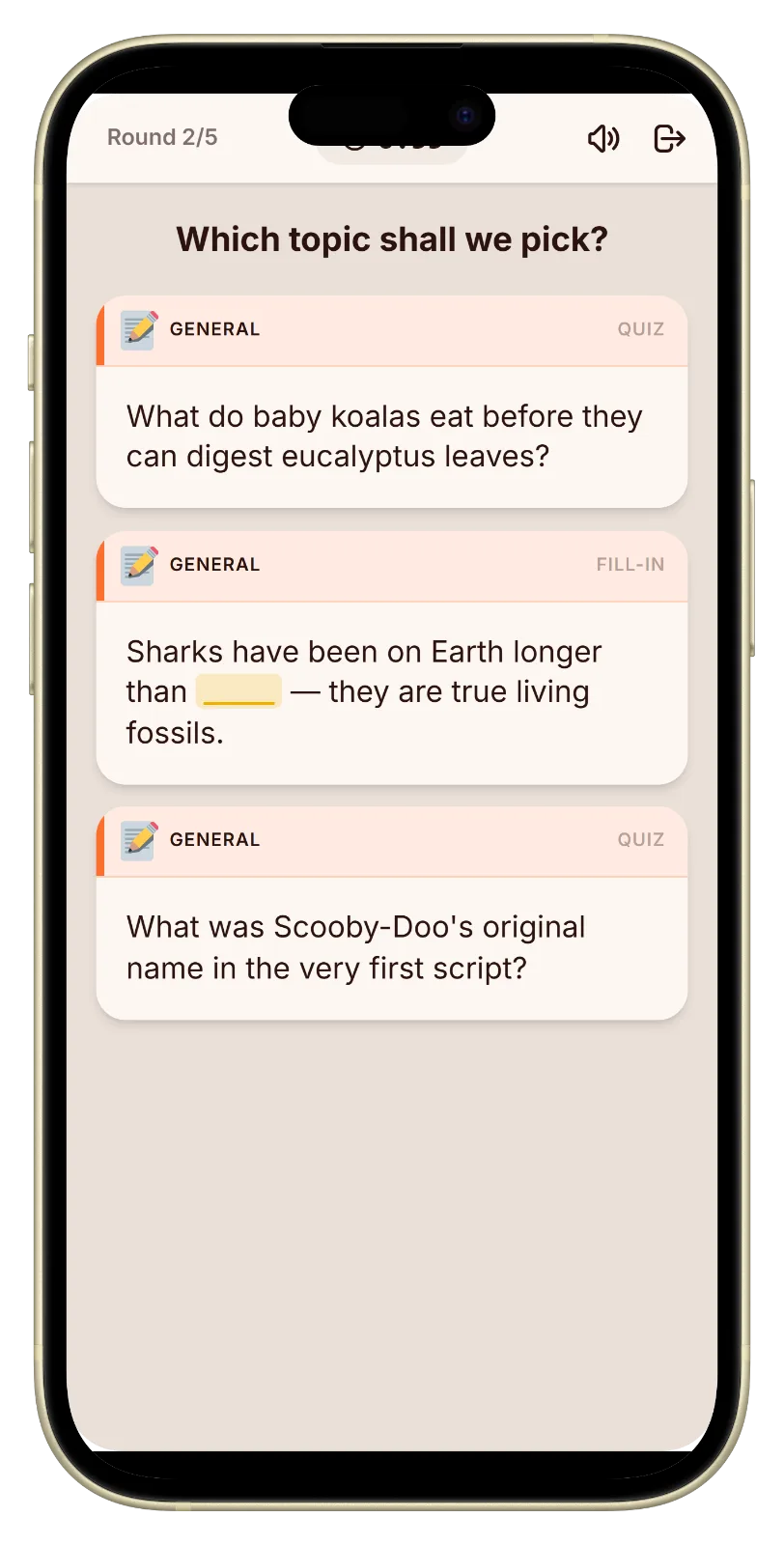
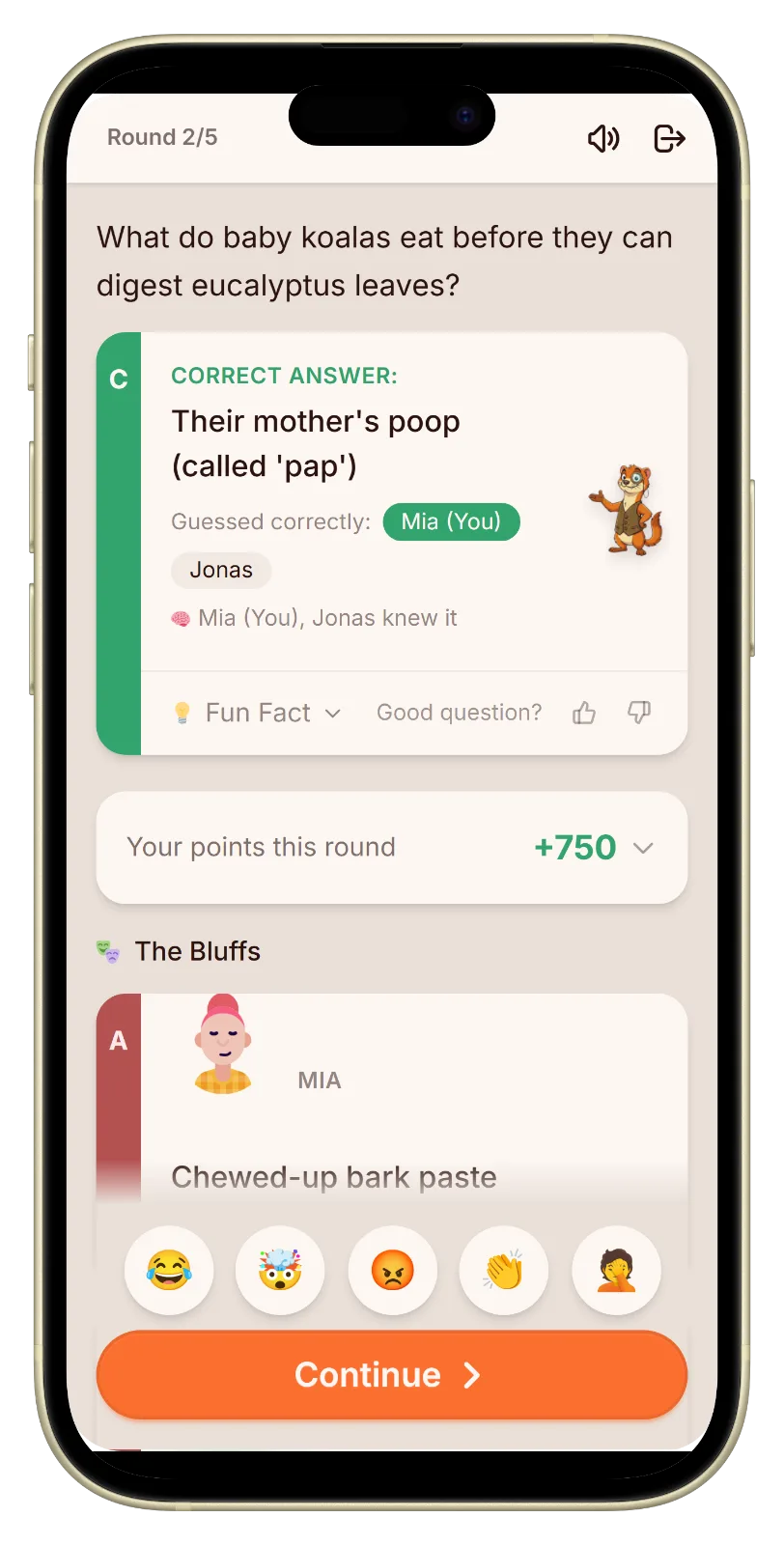
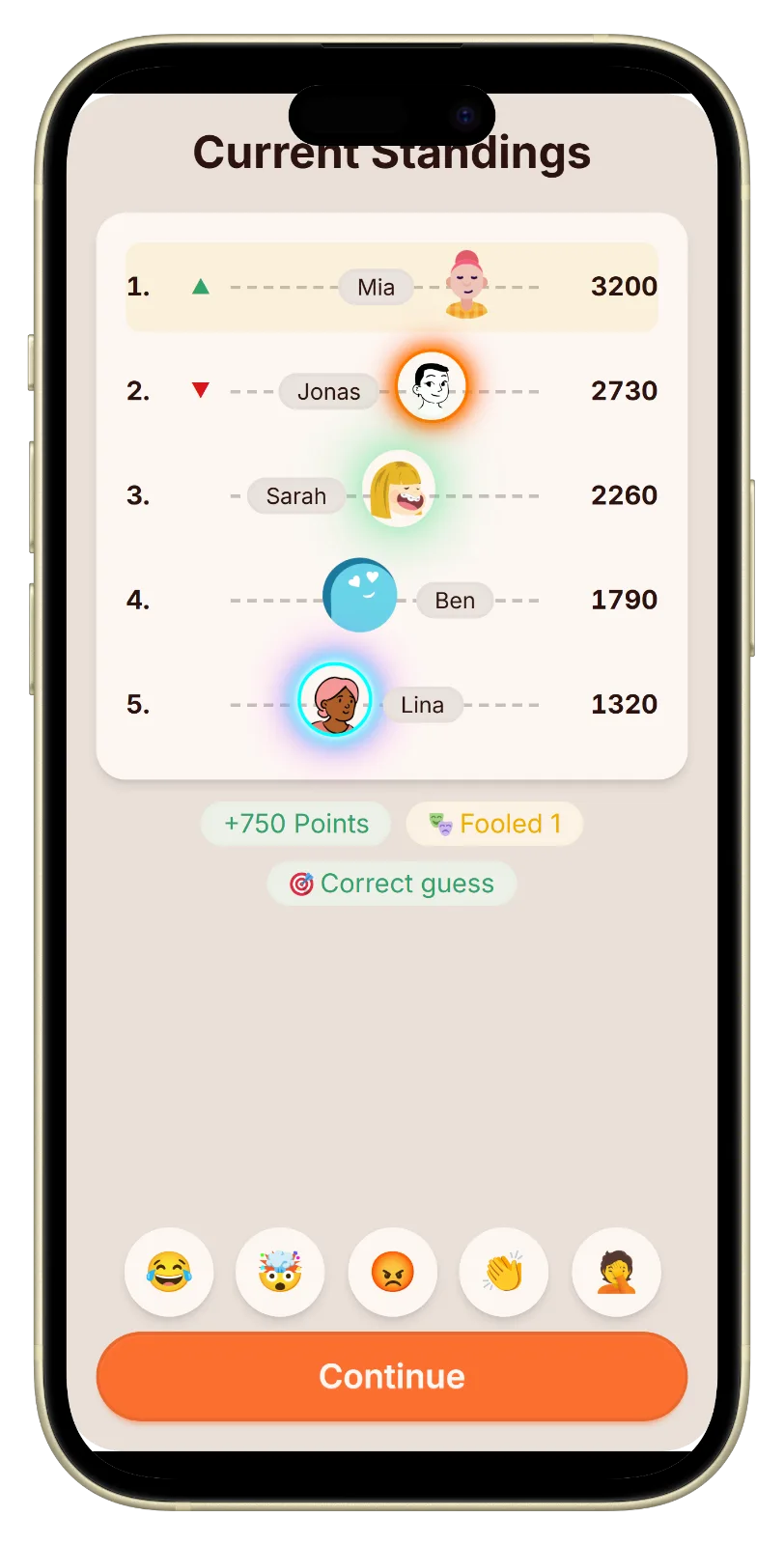
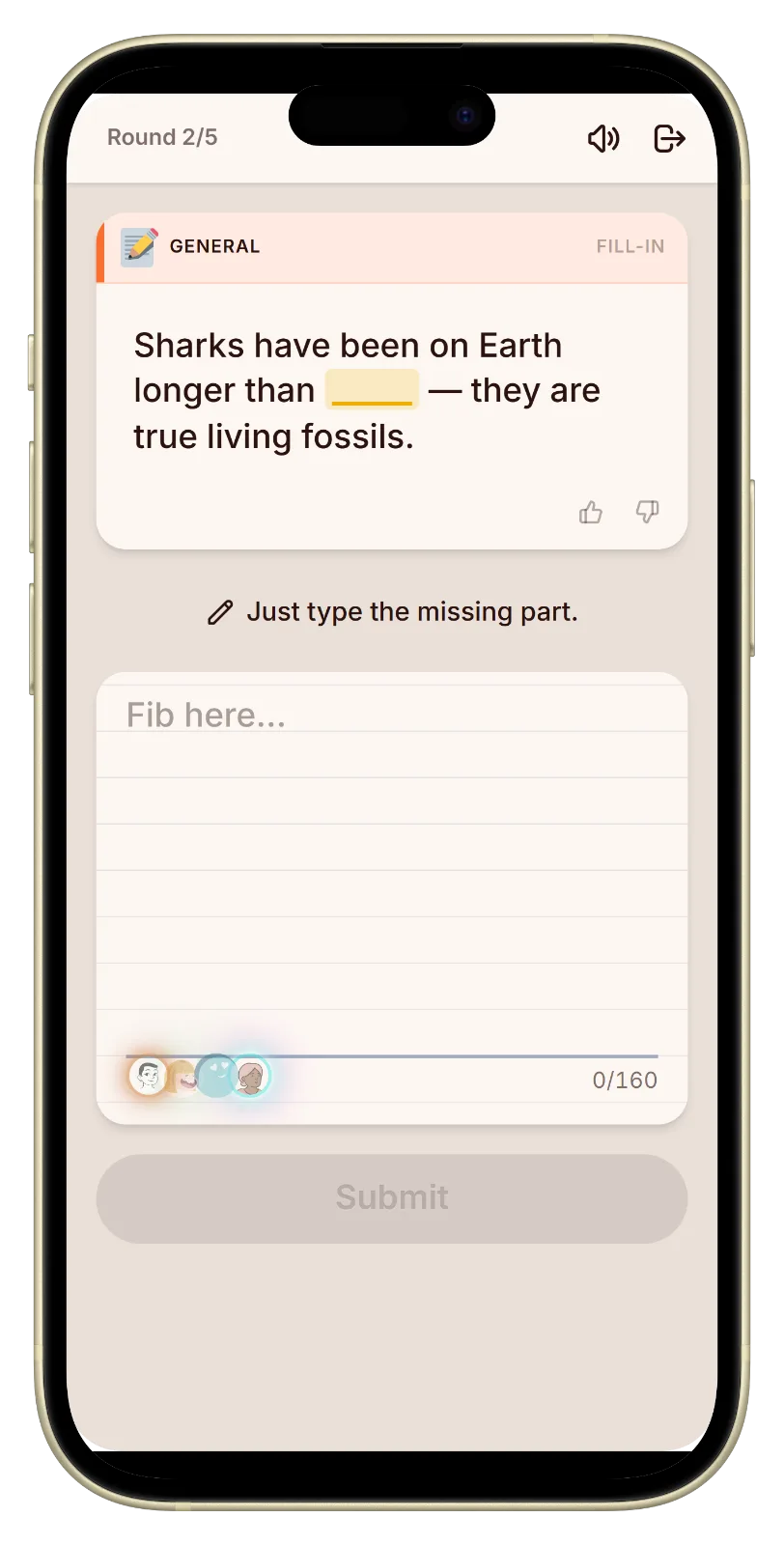
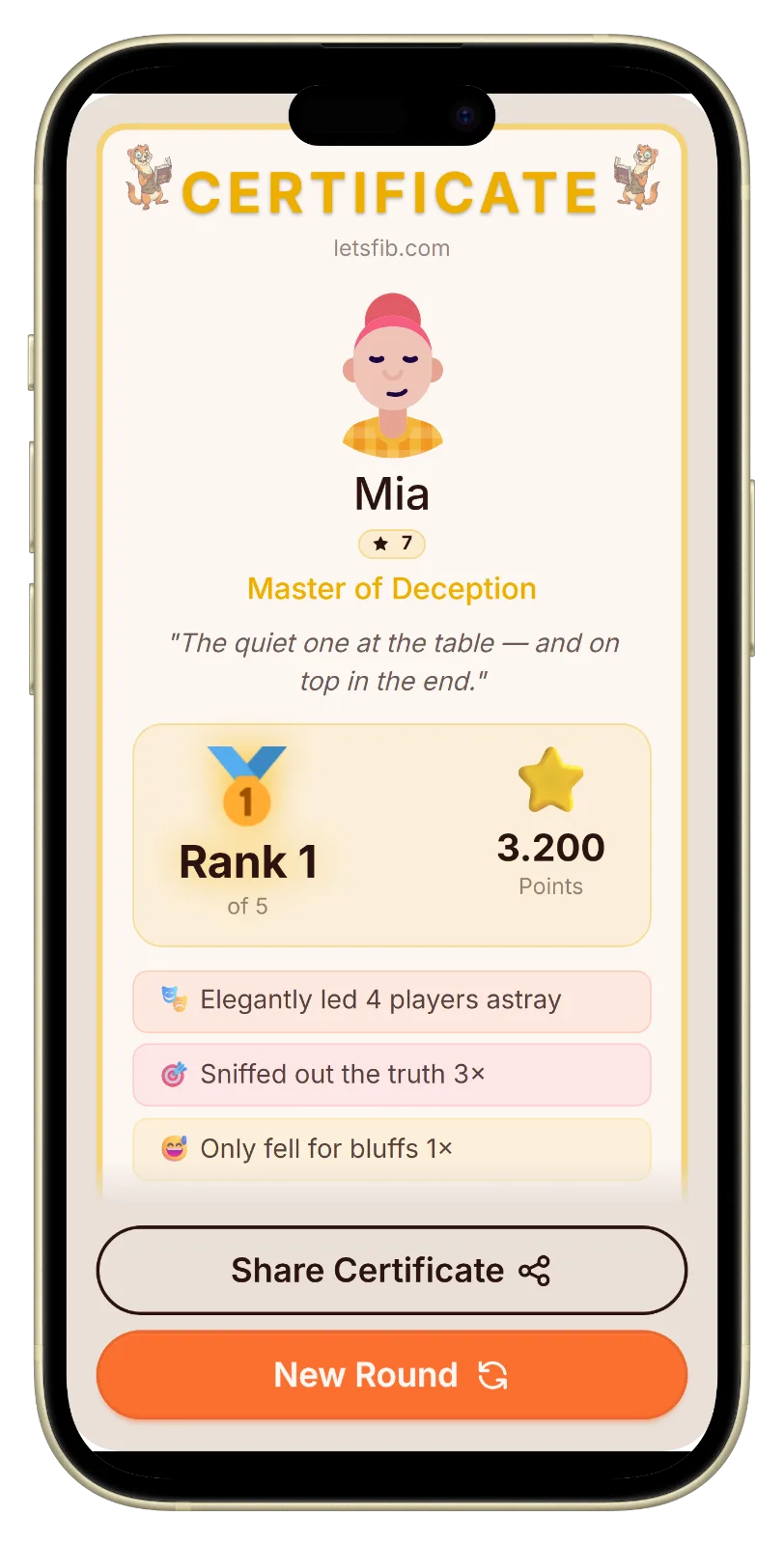
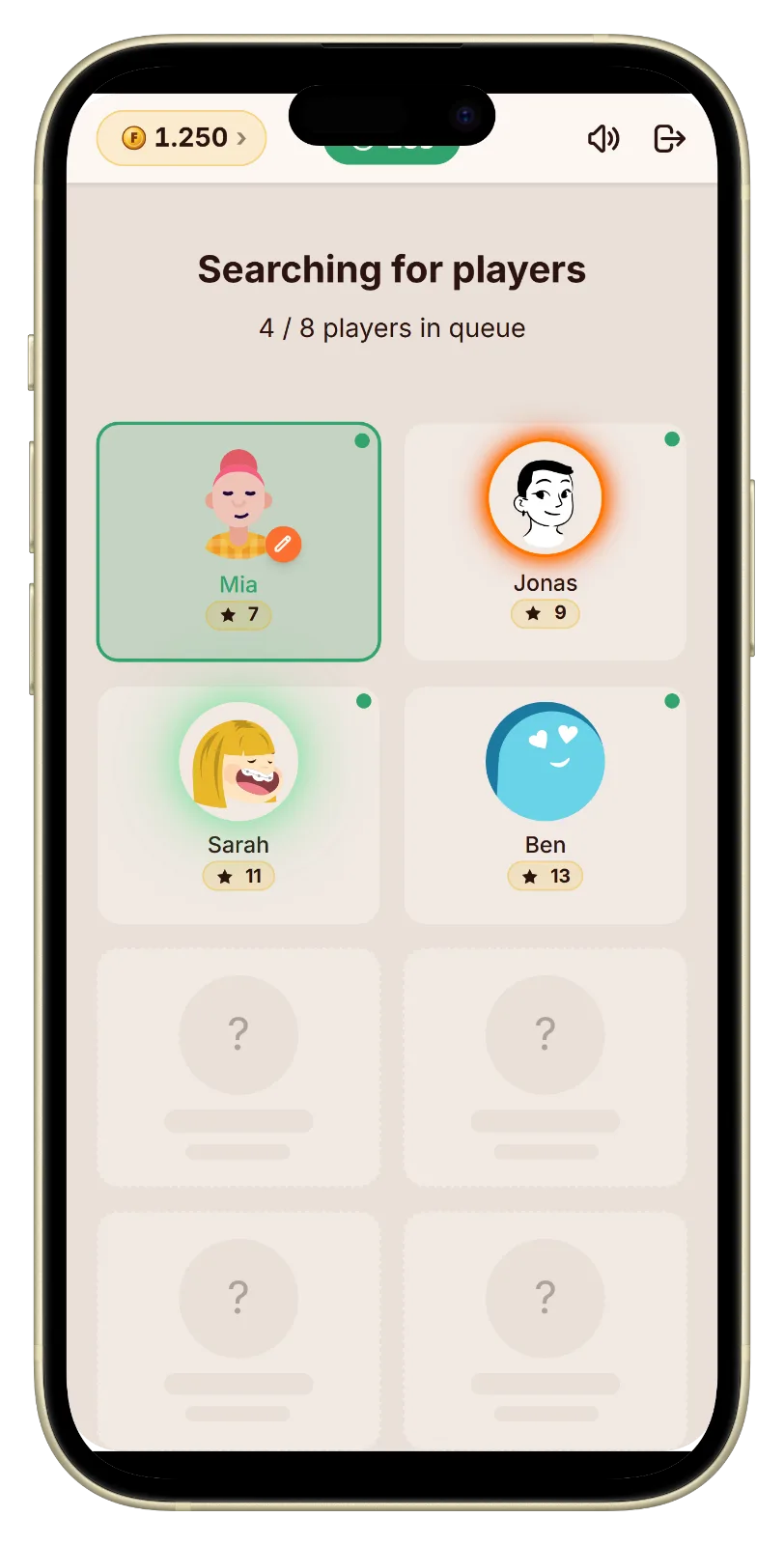
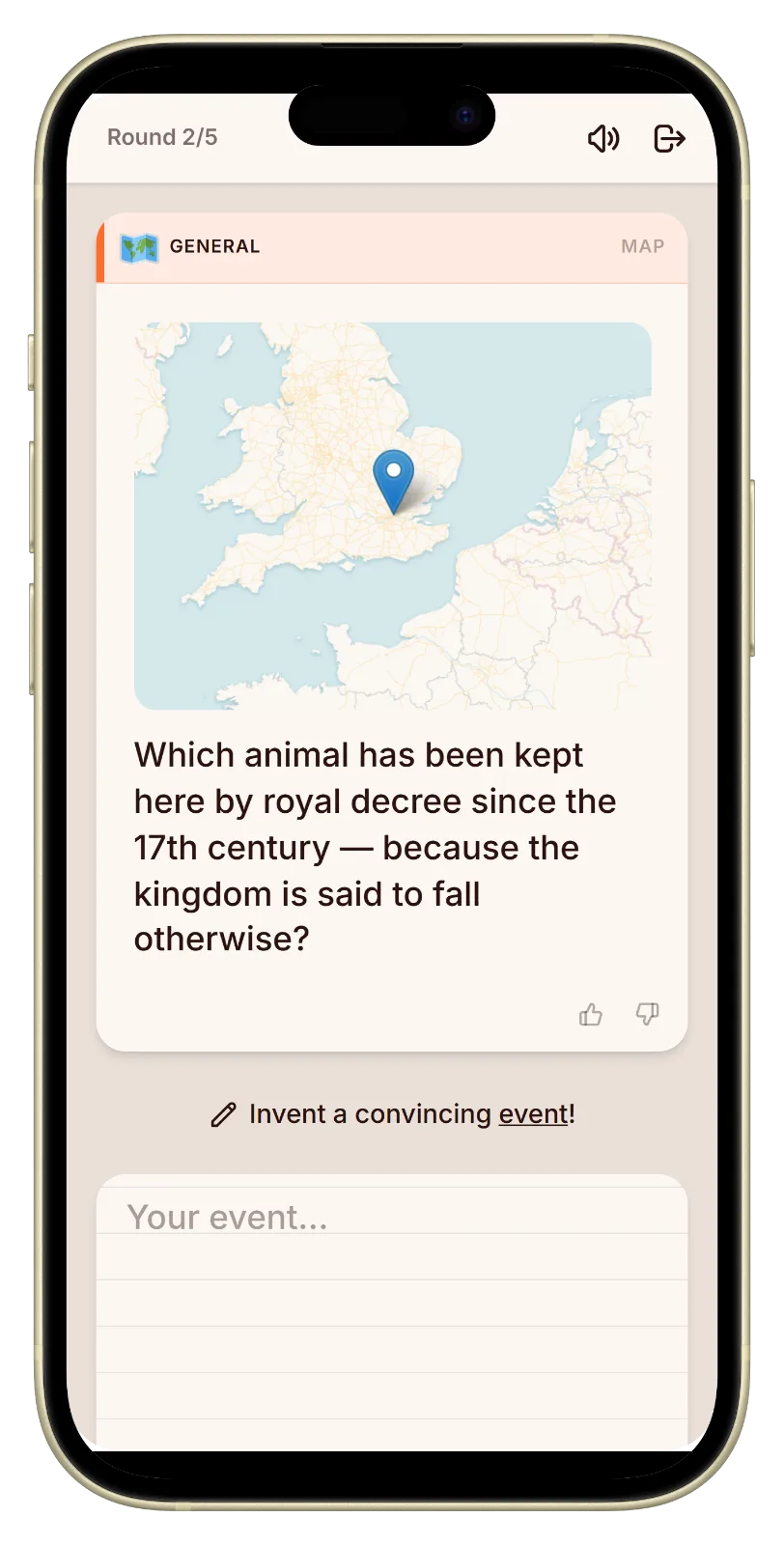
Everyone types on their own phone. Nobody has to stand up, nobody has to speak loudly, nobody is in the spotlight. In Let's Fib!, you get absurd quiz questions that nobody knows the answer to. Everyone invents a creative fake answer at the same time while AI players join in. Then you vote: Which answer sounds real?
This game is tailor-made for introverts: You type in peace on your phone, and your answer stands on equal footing with everyone else's. No advantage for the loud, no disadvantage for the quiet. And when your bluff fools three people, it feels better than any Charades performance. Picture rounds, geo-quizzes on a world map, fill-in-the-blanks. Up to 8 players, free, no download needed.
Gartic Phone Free Browser
Telephone meets drawing. You write a sentence, someone draws it, the next person describes the drawing, and so on. At the end, the entire chain is revealed. The result is almost always absurd, and the laughs come naturally.
Everyone works on their own: writing, drawing, describing. No spotlight, no time pressure in front of an audience. The results are only revealed together at the end, and then the whole group laughs at the chain, not at any one person. Free in the browser, 4 to 30 players. Looking for more quiet games to play with friends online? You'll find a complete comparison there.
Just One ~$20 Card Game
One player has to guess a word. Everyone else writes down a clue at the same time, but duplicate clues are eliminated. If three people write "water," the guesser sees none of those clues. So everyone has to think creatively: What clue will nobody else give?
Cooperative instead of competitive. Everyone writes quietly on their own, no rivalry, no pressure. And because obvious clues get eliminated, it's the unconventional thinkers who shine. If you think outside the box instead of shouting the obvious, you've got the edge. 3 to 7 players, Game of the Year 2019. Find more cooperative games in the no-prep party games guide.
Silence as Game Mechanic
Some board games for introverts take things a step further: Here, silence isn't a drawback. It's part of the game design. If you're good at observing and reading the mood, you've got a real advantage.
The Mind ~$15 Card Game
A game where talking is forbidden. Everyone has number cards in hand, and the group must play them in ascending order together, without communicating. No whispering, no gestures, no signals. Just eye contact and gut feeling.
The Mind is the most introvert-friendly game out there, because silence is the actual game mechanic. If you're good at listening and reading the room, you have a real advantage. The moment when the whole group plays a card in perfect sync feels like telepathy. From 2 players, a round takes about 15 minutes.
Mysterium ~$40 Board Game
One player is the ghost, the rest are investigators. The ghost can't speak and communicates only through abstract picture cards. The investigators discuss which suspect, which location, and which weapon might be meant. Cooperative, atmospheric, a bit like Cluedo meets Dixit.
As the ghost, you're intentionally silent. As an investigator, you discuss with the group, but nobody forces you to talk. You can just as easily think quietly and nod. The game rewards observation and association, not volume. 2 to 7 players, a game takes about 45 minutes. Perfect for a relaxed game night with friends.
Dixit ~$30 Card Game
Everyone holds beautifully illustrated cards. The storyteller picks a card and says a word, a phrase, or a sound to go with it. Everyone else plays a card face-down that could match. Then the cards are revealed and everyone guesses: Which card was the original?
The genius part for introverts: Your clue can be a single word. No lengthy speech, no explaining, no performance. A quiet "longing" is enough. And the images on the cards are so evocative that thoughtful people often give the best clues. 3 to 8 players, Game of the Year 2010, virtually endless with expansions.

Thinking Instead of Performing
Not every introvert-friendly game relies on silence or typing. Some simply reward strategy and pattern recognition instead of showmanship and volume.
Codenames ~$20 Card Game
Two teams, each with a spymaster. 25 words are laid out on the table. The spymaster gives a single clue, one word and one number, and their team must find the right words. "Ocean 3" could point to Wave, Shark, and Deep... or maybe not.
As a team member, you just listen, think, and point. As spymaster, you give one single clue, no monologue needed. The game rewards precise thinking over loud talking. Introverts who love spotting connections and patterns often outplay everyone here. 4 to 8 players, and there's a Duet version for 2.
All Games at a Glance
| Game | Players | Cost | Why introvert-friendly |
|---|---|---|---|
| Let's Fib! Recommended | 2 to 8 | Free | Type anonymously, no acting |
| Gartic Phone | 4 to 30 | Free | Draw alone, laugh together |
| Just One | 3 to 7 | ~$20 | Cooperative, everyone writes quietly |
| The Mind | 2 to 4 | ~$15 | Silence is the game mechanic |
| Mysterium | 2 to 7 | ~$40 | Silent role, observation counts |
| Dixit | 3 to 8 | ~$30 | A single word is enough as a clue |
| Codenames | 4 to 8 | ~$20 | Thinking beats talking |
Tips: Making Game Night Work for Everyone
Mix it up, don't force it. Don't play the same game all evening. Two rounds of Let's Fib, then Codenames, then Mysterium to wind down. If a game doesn't click with someone, just switch. No drama, no "you have to join in."
Text over talk. Quiet games for adults where you type or write are almost always more introvert-friendly than games where you have to speak. Let's Fib, Gartic Phone, and Just One all use this principle. If you're looking for more digital options, group phone games is a good starting point.
Prefer smaller groups. The bigger the group, the more pressure on quiet people. 4 to 6 players is ideal. If more people show up: Two parallel game tables instead of one big round.
Cooperative over competitive. In cooperative games like The Mind, Just One, or Mysterium, there are no losers. That takes the pressure off, and quiet players feel more comfortable contributing.
Make introductions easy. If the group doesn't know each other well yet, pick icebreaker games that don't rely on small talk. Let's Fib works great among strangers too, because you don't have to talk about yourself.
Conclusion
Introverted people aren't bad at games. They just need the right ones. Quiet group games that reward thinking over volume. Games that ask for anonymous participation instead of public performance. Games where the best idea wins, whether it was whispered or shouted.
The Mind proves that silence can be the most intense gaming experience. Let's Fib shows that the cleverest bluff can come from the quietest player. And Dixit turns a single whispered word into the strongest move of the evening.
So next game night: Charades can stay in the cupboard. There are plenty of quiet games to play with friends where everyone can join in, not just the loud ones.
Play quietly, win loudly.
Let's Fib: Type instead of perform. Free, no download, up to 8 players.
Frequently Asked Questions About Games for Introverts
What makes a game introvert-friendly?
No acting in front of the group, no time pressure when explaining, equal participation regardless of volume. Ideal games are ones where you write or type instead of speaking out loud, and where thinking matters more than quick reactions.
Which free quiet games work well for introverts?
Let's Fib is free to play in the browser: Everyone types anonymously on their own phone, no acting required. Gartic Phone works in a similarly quiet way, everyone draws and writes on their own. Both games need no download and no account.
Can introverts and extroverts play together?
Yes, and that's exactly the point. The games on this list work equally well for both types. Let's Fib is just as fun for extroverts, it just removes the disadvantage for quieter players. Codenames and Dixit bring both player types together because they reward different strengths.
Are there good games for introverts to play as a pair?
The Mind works with 2 players and is especially intense that way. Let's Fib fills in with AI opponents, so even two players get a full round. Codenames Duet is specifically designed for 2 players. Mysterium also works from 2.
What's the difference between introverted and shy?
Introverted people need more time to recharge after social interaction. Shyness is the fear of being judged. Both can overlap, but they don't have to. An introverted person can be very confident but simply prefers quieter activities. Introvert-friendly games help with both.
How many players are ideal for a quiet game night?
4 to 6 players is the sweet spot. Big enough for real group dynamics, small enough so nobody gets lost in the crowd. For larger groups, set up two parallel game tables rather than forcing everyone into one big round.
Do these quiet group games work at corporate events or team-building?
Especially well, actually. In professional settings, most people don't want to embarrass themselves in front of colleagues. Let's Fib, Codenames, and Just One work without any cringe factor while still being genuinely fun. The barrier to entry is low, and nobody gets put on the spot.