 Let's
Let's 
Two Truths and a Lie: Examples, Ideas, and How to Play
Three statements about you. Two are true, one is made up. Everyone else has to spot the lie. That's all Two Truths and a Lie needs, and it's exactly why it works anywhere a group is sitting together: at a party, with friends, in a team workshop, or the first time a new group meets. The more people guessing, the more fun it gets.
Here you'll find the complete how-to, 30+ examples (from harmless to genuinely funny), and the digital version with Let's Fib, where nobody has to come up with statements at all. Looking for more in this direction? There are plenty of other icebreaker games for adults in the big guide.
Contents
What is Two Truths and a Lie?
Two Truths and a Lie (sometimes written "Two Truths, One Lie") is an icebreaker and party game with no equipment. Each player makes three claims about themselves: two are true, one is invented. The others guess which of the three is the lie.
The fun is in the bluff. You win when your lie sounds so believable that nobody catches it, and your truths sound so unbelievable that everyone thinks they are the lie. The best part: the game always reveals a real story about each person, even in groups that have known each other for years. "You were once an extra in a movie?" isn't something you hear every day.
- Players: 3 or more, ideal 5 to 10 (best in a big group)
- Equipment: none (one phone is enough for the digital version with Let's Fib)
- Time: 1 to 2 minutes per person
- Great for: parties and friend groups, icebreaking, team building, the classroom
How to play, step by step
The rules fit in one sentence, but a few details make the difference between a decent round and a really good one.
- Pick an order. Just go clockwise or start with a volunteer.
- Prepare three statements. Everyone thinks of two true and one invented claim about themselves. Keep them short, no long explanations.
- Say them out loud. One after another, without giving away which one is the lie. Poker face encouraged, follow-up questions allowed.
- Guess. The group votes on which statement is the lie. Either discuss openly or point at the count of three (statement 1, 2 or 3).
- Reveal. Anyone who misses the lie got fooled. Whoever guesses right scores a point, if you play with scoring.
Scoring is optional. Plenty of groups play with no points at all, simply because the stories behind the statements are entertaining. If you want it more competitive: one point for everyone who fails to spot your lie, one point for you whenever you catch someone else's.

30+ examples for Two Truths and a Lie
The hardest part is coming up with good statements on the spot. Here is a collection to steal and tweak, sorted by mood. Pick two that are true, then invent one to go with them.
Funny examples Popular
The best laughs come from statements that sound absurd but could be true:
- I once called my boss "Mom" by accident.
- I can lift a glass of water with my toes.
- I was in a TV commercial as a kid.
- I once walked into the wrong wedding and sat down with strangers.
- It took me three days to realize my WiFi was off, not the internet.
- I can whistle the theme songs of twelve TV shows.
- I once held the door for a celebrity and didn't recognize them.
- I own more plants than mugs.
- I started a marathon and quit after a few miles at a coffee shop.
- I once lost my car for a whole week.
Clean examples for any group Easy
For when the group doesn't know each other well yet, or it needs to stay family-friendly:
- I have never been to another continent.
- I have a pet with an unusual name.
- I can play a musical instrument.
- As a kid I dreamed of a completely different career.
- I speak a language nobody here would expect.
- I have stood on a stage before.
- I like breakfast for dinner best.
- I have a sibling with almost the same name as me (a nickname).
- I was once on a team that actually won something.
- I have a driver's license I never use.
Examples for breaking the ice Icebreaker
Perfect when the game runs as an icebreaker in a new group, a team, or on a date. These statements invite follow-up questions and get the conversation going:
- I have lived in three different cities.
- My first job had nothing to do with what I do now.
- I once won an award I'm still proud of.
- I have traveled somewhere completely on my own.
- I have a hobby most people find surprising.
- As a teenager I did something wild I would never do again.
- I know someone famous in person (well, almost).
- I once completely changed my mind about something.
- I used to play a sport nobody would expect.
- I have been on live TV once.
- My best vacation was somewhere close to home, not far away.
- I have a favorite food most people find weird.
Tip for the work or team setting: keep it positive and voluntary. Nobody has to share anything embarrassing. More on that in our overview of icebreaker games for adults.
The perfect lie: 5 tips
If you keep getting caught right away, you're usually making the same mistake: your lie is too spectacular. Bluff better like this:
- Make the lie sound boring. "I once had a blue bike" gets suspected far less than "I petted a shark."
- Make your truths unbelievable. If your real stories are wilder than your lie, everyone guesses wrong.
- Stay equally calm on all three. No nervous grin on the lie, no hesitation. Deliver all three in the same tone.
- Details, but not too many. One small concrete detail feels real. Overload the lie and you give yourself away.
- Prepare a follow-up answer. If someone asks about the lie, you can't afford to freeze.
Play together with Let's Fib Recommended Free Browser
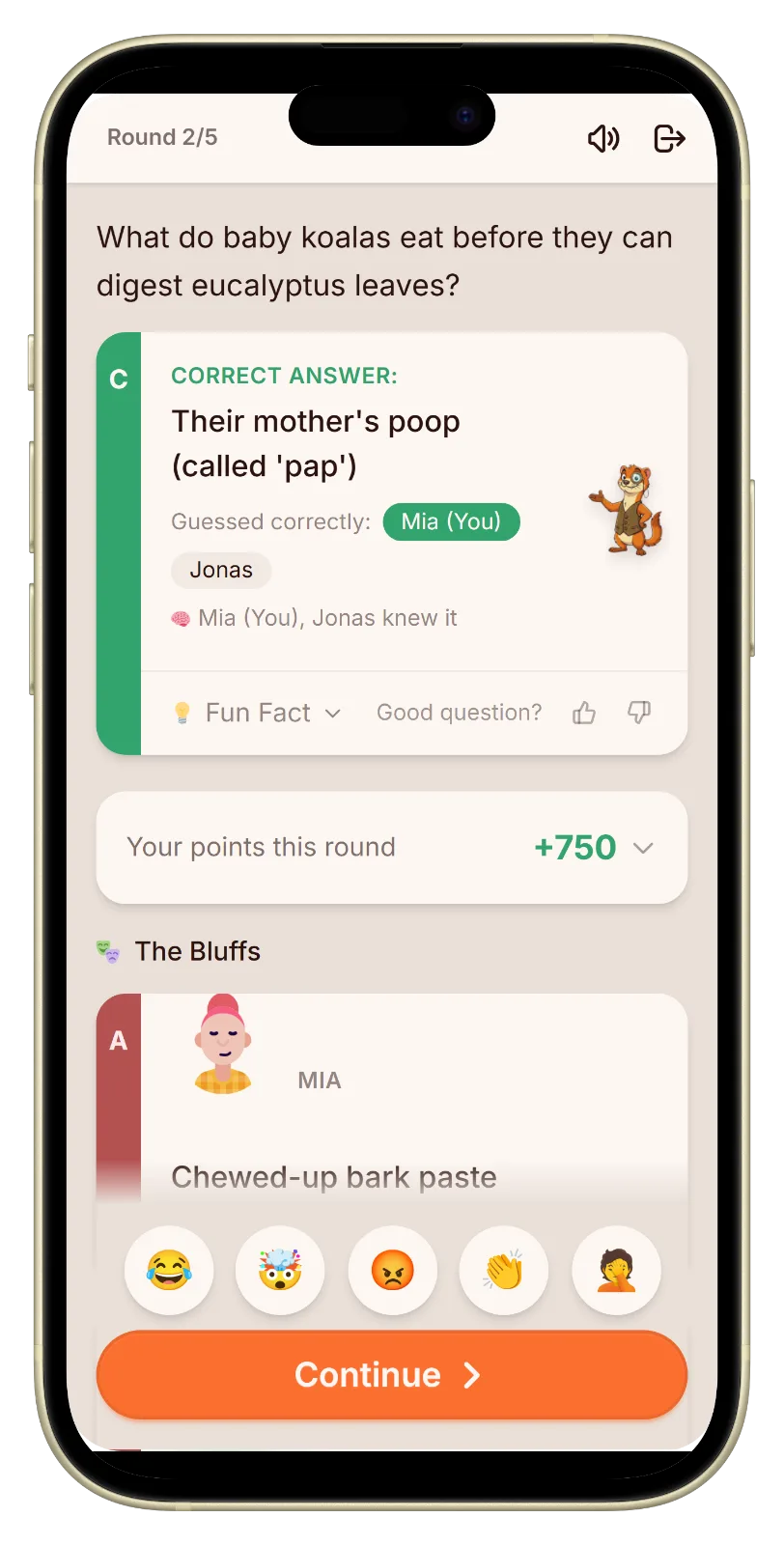
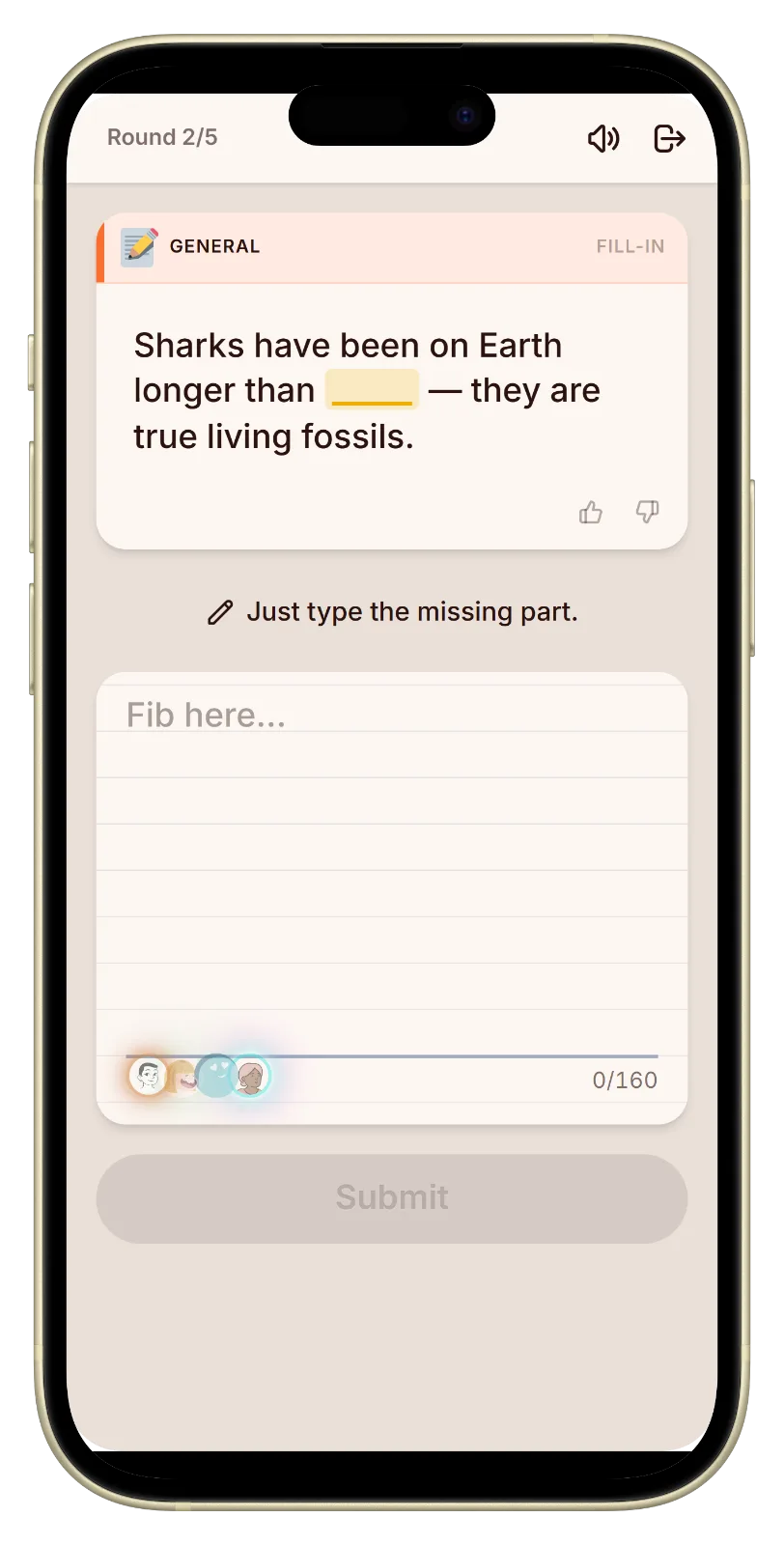
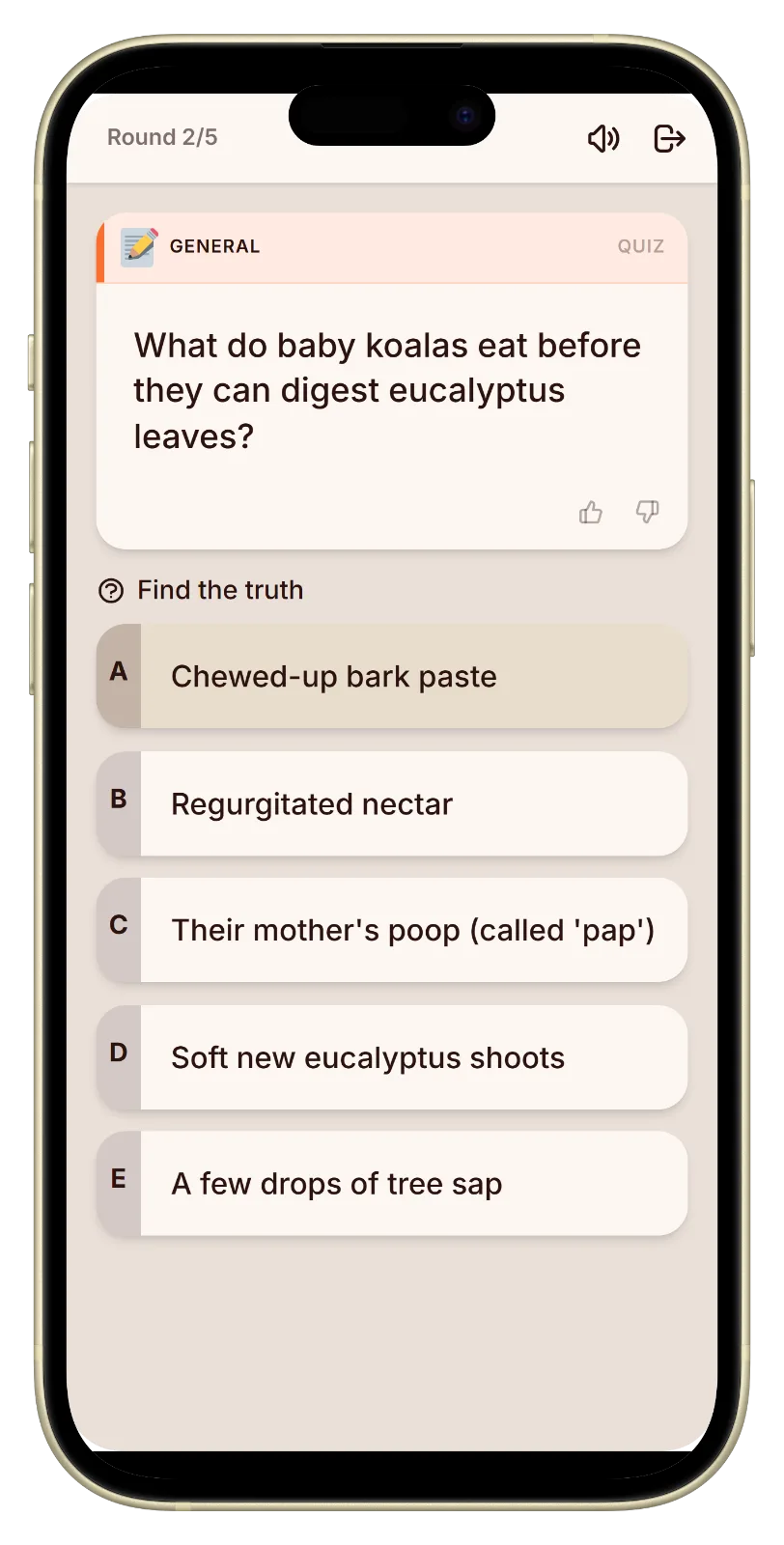
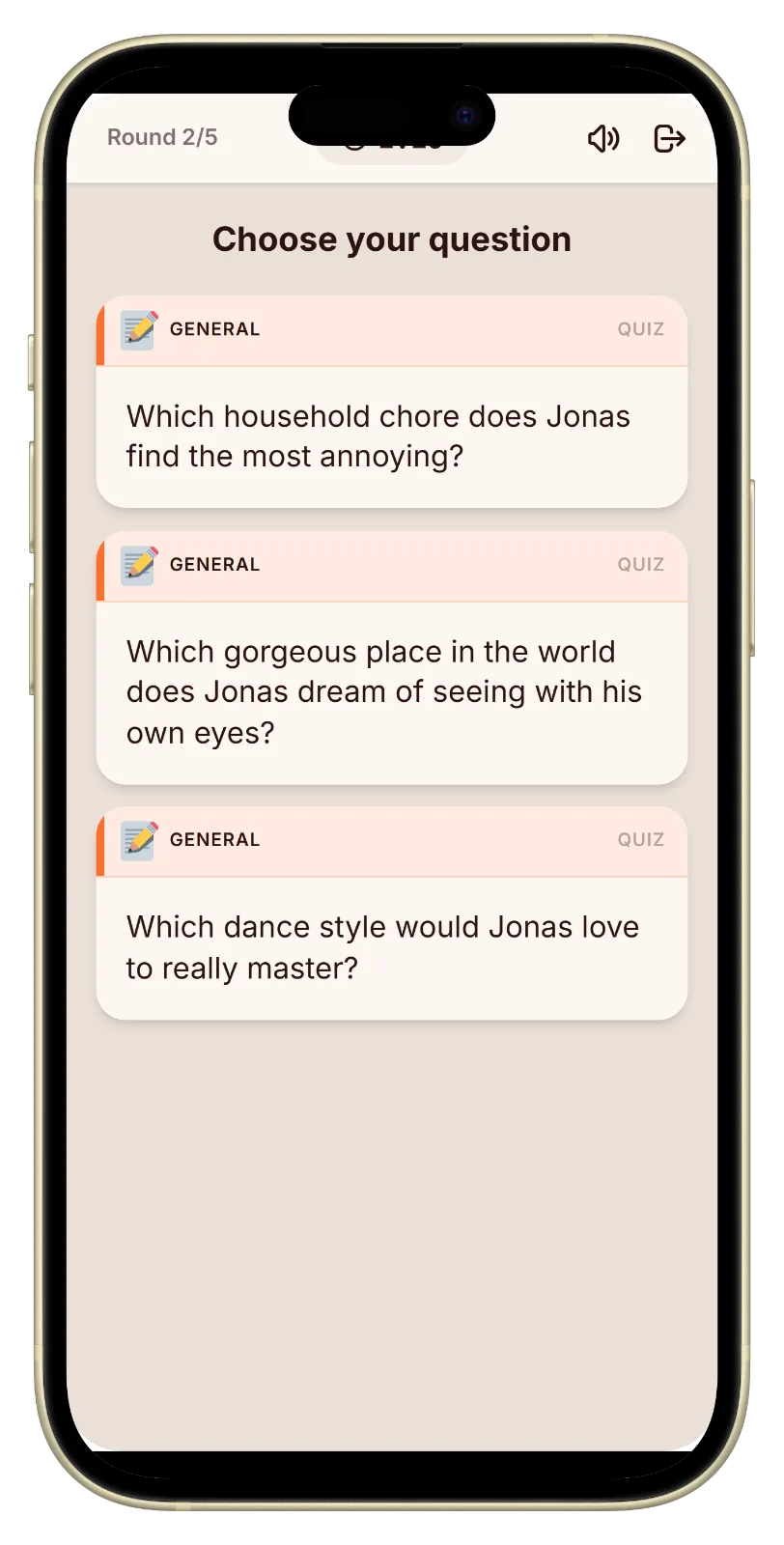
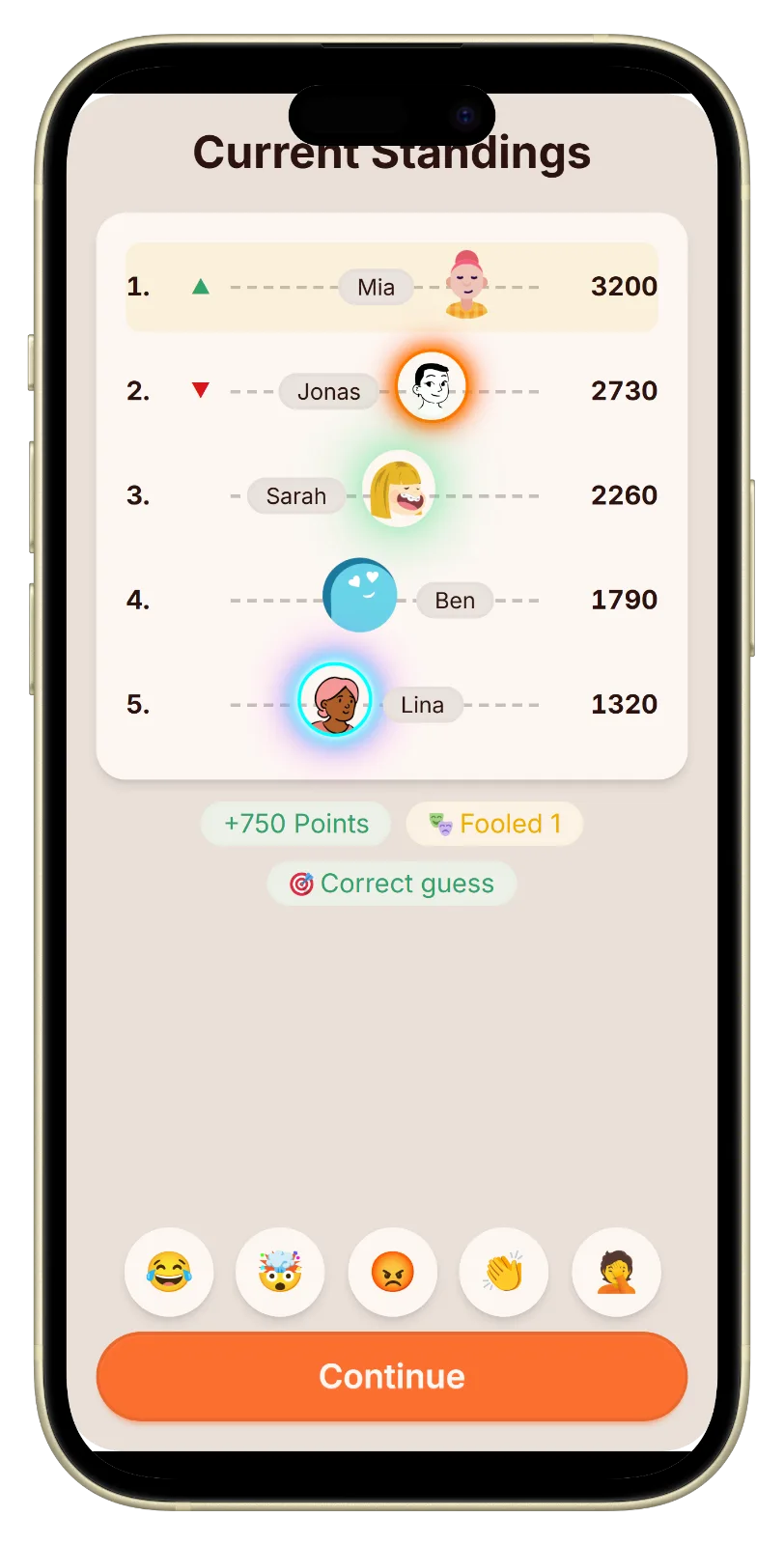
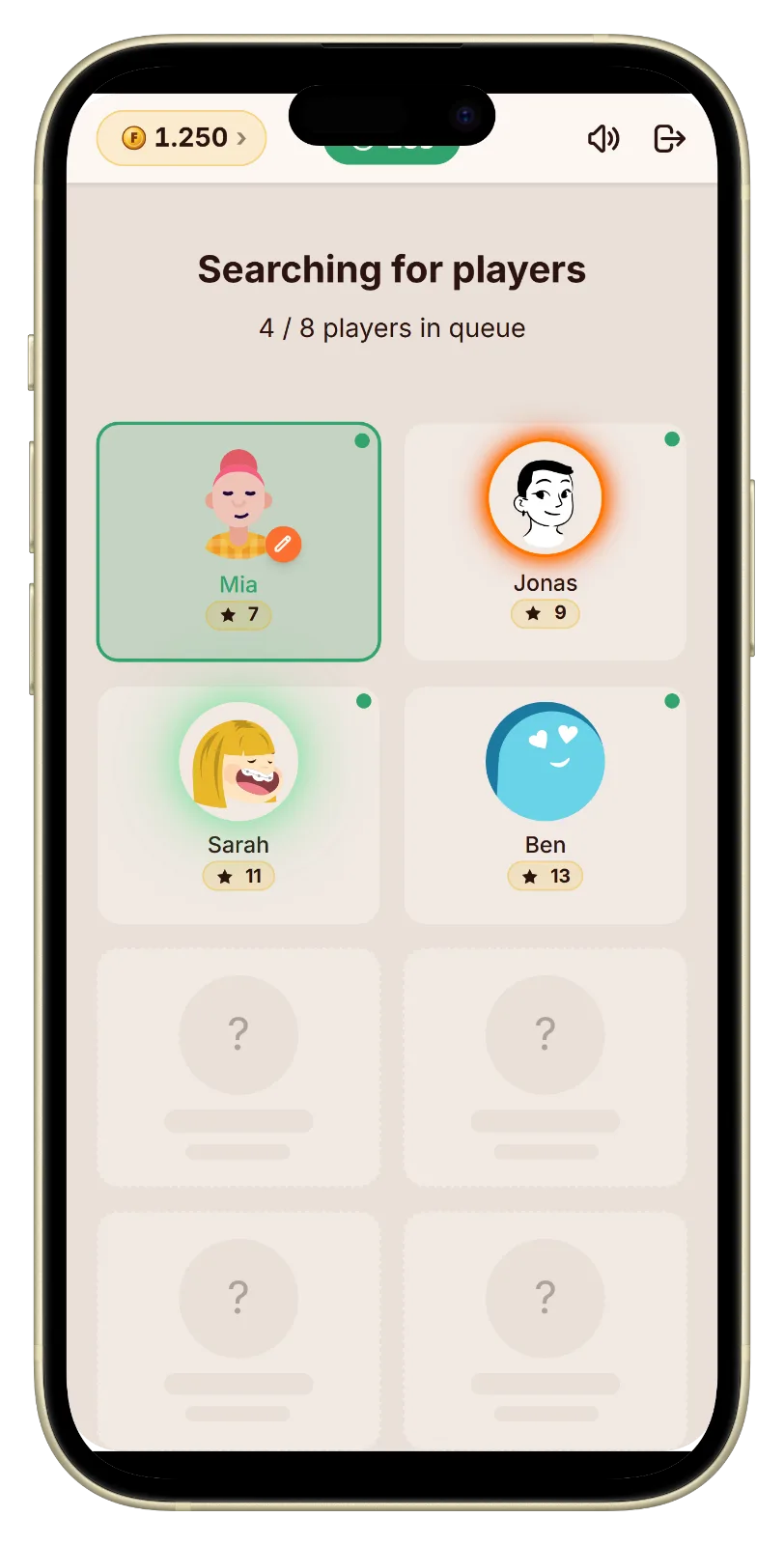
If good statements never come to you on the spot, Let's Fib! takes that off your hands. The principle is the same as Two Truths and a Lie, just flipped: instead of your own claims, you get a quirky question, everyone writes a made-up answer, and then the group has to find the real truth among all the convincing bluffs.
It's built for the group that's already sitting together: one person opens a room, shares the code, and everyone joins the same round on their own phone. You play together around the table, each typing their bluffs, all guessing at once, just like the original, only without the "I can't think of anything" moment. The "About Me" mode gets even closer to the original: a whole round revolves around one single person in your group. Up to 8 people, free, no download. It's the same format that makes multiplayer phone games for playing together so popular.

Which occasions does it fit?
Two Truths and a Lie fits almost anywhere, because it needs no equipment and explains itself in one sentence:
- Parties and big groups. This is where it shines: the more people guessing, the more stories and laughs. Funny statements get the mood going instantly. Want the same round in digital form? The party games for groups on your phone have the right app.
- Friends night at the table. After dinner, everyone stays seated, nobody has to get up. Pairs nicely with other games to play at the dinner table.
- Breaking the ice. The classic opener for new groups, college, or a first day at work. Everyone shares three real things about themselves along the way.
- Team building. A quick warm-up in a workshop or meeting that shows colleagues from a different side.
- One on one. It works on a date too, as a charming way to get to know each other, but it's most fun in a group.
Variations for more replay value
When the standard round runs out, these twists keep the game fresh:
- Themed round. Every statement has to fit one theme: travel, embarrassing moments, school days, food. It makes inventing easier and the round more focused.
- Two Lies and a Truth. Flipped. Suddenly the group has to find the single true statement, which is surprisingly hard.
- About someone else. Instead of about yourself, everyone makes three claims about the person on their left. Only works in groups that already know each other.
- Speed round. Five seconds per statement, vote right away. Less thinking, more gut feeling.
- As a drinking game. Whoever guesses wrong takes a sip. Works alcohol-free too, with a small forfeit instead.
Want the same bluffing feeling with ready-made questions? Then get the whole group around a table with Let's Fib.
Two Truths and a Lie, without the idea stress
Let's Fib handles the inventing: quirky questions, your own bluffs, the whole group guesses. You sit together, everyone grabs their phone, one round for all. Up to 8 people, free, no download.
Frequently asked questions
How do you play Two Truths and a Lie?
Each player says three claims about themselves: two true and one made up. The others guess which statement is the lie, then you reveal it. No equipment is needed and it works with three people or more.
What are good examples for Two Truths and a Lie?
Good statements all sound equally plausible. For example: "I was in a TV commercial as a kid", "I speak a language nobody here would expect", "I have traveled somewhere completely on my own". The lie should sound rather unremarkable, while the truths can be as unbelievable as you like.
How many people do you need for Two Truths and a Lie?
It works with three people, and five to ten is ideal. In larger groups it helps to keep score so it stays exciting.
How can I spot the lie?
Watch for the statement that gets explained the most or padded with the most detail, that's often the invented one. Ask follow-up questions: people tend to stumble on the lie. And spectacular-sounding statements are surprisingly often true.
Is Two Truths and a Lie a good icebreaker?
Yes, it is one of the most popular icebreakers there is, because everyone shares three real things about themselves along the way. It works in new groups, in team building, and on a date, without feeling like an interrogation.
Can you play Two Truths and a Lie online?
Yes. With Let's Fib you play the same bluffing principle in the browser. It works best when you sit together and everyone joins the same round on their own phone, but it also works remotely through a shared room code. Instead of your own statements you get questions, everyone writes a made-up answer, and the group hunts for the truth.