 Let's
Let's Playing Games Over Video Call: Does It Actually Work?
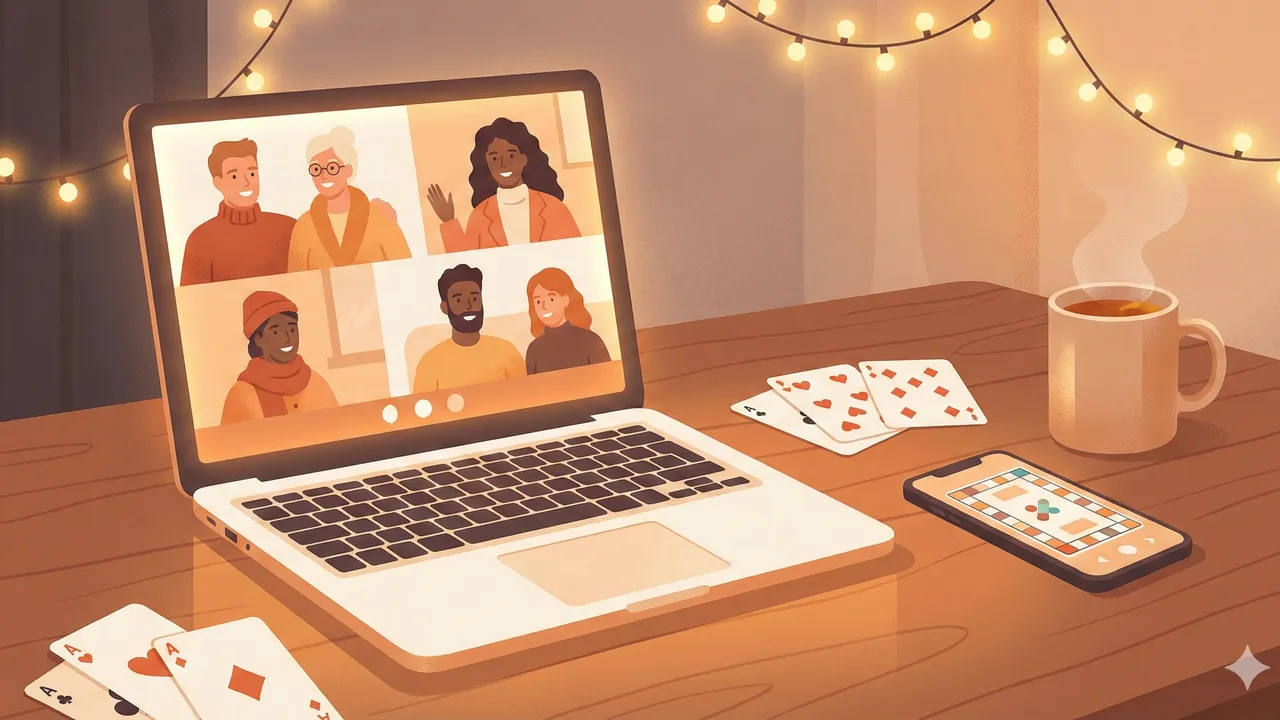
Nils broke his ankle. Nobody wanted to cancel. So we just tried it over Zoom.
The broken ankle
It was a Tuesday when Nils sent his message to the group. Photo of his foot in a splint, captioned: "Stairs. Black ice. Six weeks in a splint. Game night cancelled, I guess?" Nils lives two towns over and nobody wanted him hobbling through Heidelberg on crutches in February.
Dennis replied in under a minute: "Zoom?" Plus a shrug emoji. Marco was immediately on board. Janna was sceptical ("We're not going to play board games over a webcam, are we?"). I was somewhere in between. Curious, but with low expectations.
That was four weeks ago. Since then we've played remotely three times. And I'm genuinely surprised how little some of those evenings differed from the real thing. Not all of them. But some.
What surprisingly works
Let's Fib: Almost better remotely
I don't say this lightly, because we play Let's Fib at the table all the time. But remotely? At least as good. Maybe even better.
The reason is simple: Let's Fib runs entirely in the browser. Everyone opens the page, scans the code, done. Whether you're sitting side by side at a table or in five different flats doesn't matter to the game at all. The answers appear on screen, you guess who lied, and the reveal is just as funny as always.
What actually works better remotely: you can see everyone's faces on camera. Close-up. When Marco tries to keep a poker face while he's just typed the most absurd lie of his life, you catch that more clearly on Zoom than at the table, where you might be looking at your own cards. During the second remote evening, Janna spotted Marco's lie three times in a row just because he kept glancing to the upper left. At the table, nobody would have noticed.
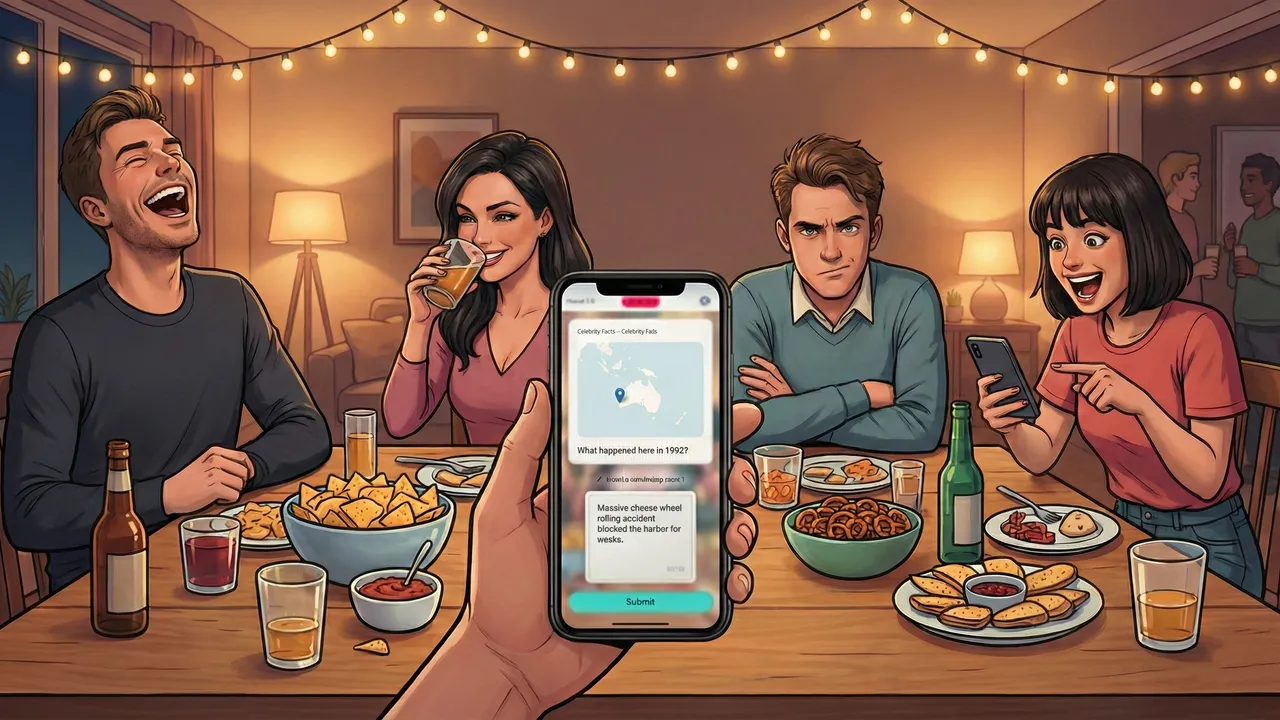
Nils said afterwards: "That was honestly better than expected." Which, coming from Nils, is basically a five-star review.
- Runs entirely in the browser, zero setup
- Everyone plays simultaneously on their own device
- Works just as well remotely as in person
- Everyone needs a second device alongside the video call
Codenames: The classic goes online
Janna's suggestion, and I was sceptical at first. Codenames thrives on sitting across from each other and reading reactions, right? True. But there's a free online version where everyone sees the same board in their browser. No account, no installation. One person creates the room, shares the link, and within a minute everyone is playing.
What surprised me: the team discussions actually work really well remotely. We set up two breakout rooms (Janna's idea, she uses Zoom for work) where the teams could deliberate privately. That even had an advantage over the table: the other team couldn't overhear the discussion. Normally you try to whisper and fail miserably at it whenever Dennis gets excited.
The online version supports over 40 languages. We even played a round in English because Janna's friend Sarah from London had joined the call. Just switched the language, off we went. That wouldn't have been so easy with physical cards.
- Free online version in 44 languages
- Team discussions work great over a call
- No account needed, just a link
- Need at least 4 people
- Secret team talks require breakout rooms
Gartic Phone: The discovery of the evening
The real surprise came from Dennis. He'd read something about Gartic Phone on Reddit and "just threw it out there" in the chat. Gartic Phone is basically the telephone game, but with drawings, and completely free in the browser. If you know Telestrations (one of our table favourites), you know the concept: you write a sentence, the next person draws it, the person after that describes the drawing, and so on. At the end you compare the original with what it turned into.
The difference from other online games: Gartic Phone doesn't need a video call to be fun. But with a video call it becomes absurd. You hear people laughing while they try to draw something, and you just know: something is going terribly wrong right now. Marco's drawing of "Nils on crutches at the beach" looked like a stick figure being attacked by a palm tree. Janna's interpretation of that was "man fights giant snake". By the end, Nils' beach holiday had turned into an apocalyptic jungle scene.
The game is available in many languages, runs on any device with a browser, and has various game modes. We mostly played the classic (alternating writing and drawing), but there's also a mode where everyone only draws and guesses simultaneously. For two to thirty players, and completely free. Dennis has since permanently pinned the link in our game night group chat.
Where it falls apart
Not everything works. And that's worth saying honestly before someone tries to play Carcassonne over Zoom.
Anything with physical components. We briefly considered having one person set up the board and point the camera at it. Dennis tested it with 6 Nimmt! Reading cards over webcam while one person manages the rows on the table. Technically it worked. It was zero fun. The delay between "I'm playing the 55" and "oh, the row is full" killed the entire rhythm.
Games that rely on table energy. Skull, for example. Brilliant at the table because you can feel the bluff in the room. The hesitant glances, the deliberate placing of the card. Too much of that gets lost on camera. Not impossible, but it feels like watching a film in standard definition when you're used to IMAX.
More than five people. At the table, our evenings work fine with six or seven people. Remotely, it gets chaotic beyond five. Too many voices talking at once, too many tiles on screen, too much latency. Our sweet spot: four to five. Enough for good games, few enough for real conversations in between. (If you still want to play remotely with a big group: games like Let's Fib work with 20 people too, because everyone plays on their own device and not everyone needs to talk at the same time.)
Spontaneous moments. That's what you miss the most. At the table, things are constantly happening on the side. Marco takes a jab at Dennis sitting next to him. Janna secretly starts sorting her cards. Someone reaches for a snack and knocks over a game piece. On a video call you're always "on stage". Every remark goes to everyone, no whispering, no side conversations. It makes the evenings more focused, but also more tiring.
Our remote rules
After three evenings, we've learned a few things that make all the difference:
Audio matters more than video. Seriously. The first time, Marco had his laptop mic on and every time he typed it sounded like a tiny jackhammer. A headset or earphones are the difference between "nice try" and "actually works". Nils used AirPods the second time and suddenly you could understand him without anyone having to shout "WHAT?".
Plan for a second device. For Let's Fib or Gartic Phone you need one device for the video call and one for the game. Laptop for Zoom, phone for the game. Sounds obvious, but it wasn't on the first evening. Janna tried doing both on her phone and minimised the video call every time she wanted to type an answer. From evening two onwards, everyone had two devices ready.
Breaks matter more than at the table. At the table, people stand up, grab a drink, chat briefly about something else. Over Zoom you stare at the screen for an hour and wonder why everyone is suddenly tired. We now take a short break after every round. Everyone grabs something, everyone mutes, five minutes of quiet. Sounds trivial, helps enormously.
Don't replace every game night. That's the most important takeaway. Remote game nights are good. Sometimes really good. But they don't replace the real thing. They're the solution for "Nils has a broken ankle" or "Marco is away for work in Munich" or "It's pouring and nobody wants to go out". No substitute for the table, the snacks, being together in the same room. Anyone who can plan a game night in person should always choose that.
Nils gets his splint off in two weeks. He's already announced he wants to play "for real" then. But he also said he'd keep the odd remote evening going. "For the weeks where you otherwise just wouldn't see each other at all." And I can't really argue with that.
You might also like
 Nina
7 min read
Nina
7 min read
Making Your Own Game Cards: Crafting, Printing and the Road to Your Own Card Game
How we started making and printing our own game cards. With kids, a laminator, and more ambition than planned.
Read more →
 Stefan
6 min read
Stefan
6 min read
Why Every Board Game Seems to Be "Game of the Year"
Every box in the store carries that red logo. But what's actually behind Germany's Spiel des Jahres, how many games really get the award, and is it worth buying by the sticker?
Read more →
 Ayla
5 min read
Ayla
5 min read
The Game Night Nobody Wanted
Everyone wanted to cancel, nobody had the energy, and in the end it was one of the best evenings in months. Why showing up is always worth it.
Read more →